


Throughout history, artists have used symbolism to express ideas that words alone often struggle to capture.
Paintings, illustrations, sculptures, and visual narratives have served as powerful tools for exploring the complexities of human behavior, political conflict, social instability, and the consequences of unchecked ambition. Through metaphor and imagery, artists invite viewers to look beyond the surface and reflect on deeper truths about society and the human condition.
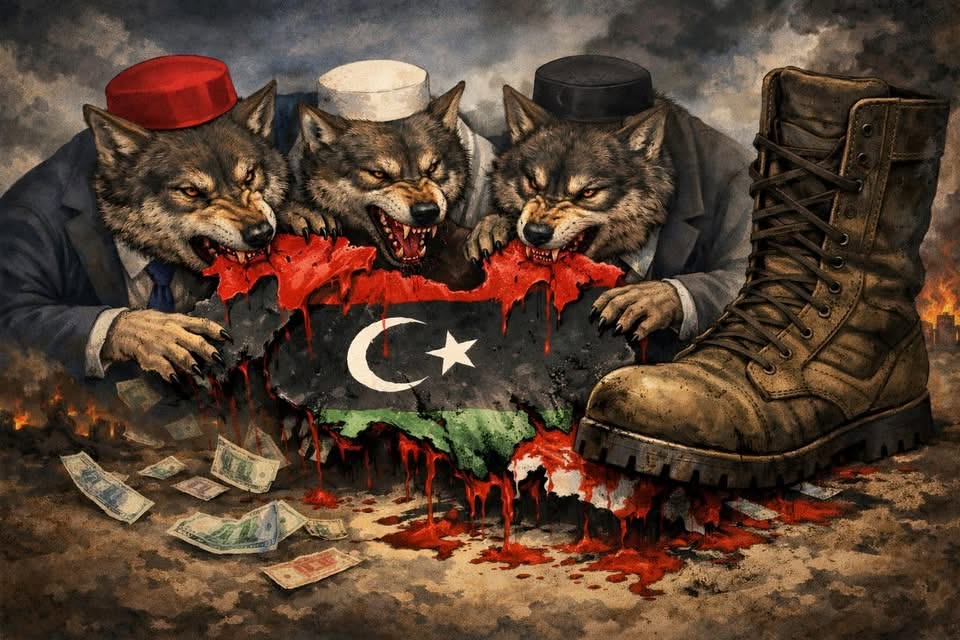
The image presented here is a striking example of such symbolic storytelling.
At first glance, viewers encounter a dramatic and emotionally charged composition. Dark tones dominate the scene. Powerful visual symbols occupy the foreground. The atmosphere feels tense, chaotic, and unsettling. Yet beneath its dramatic appearance lies a broader message—one that speaks to universal themes of power, greed, conflict, and the vulnerability of nations caught between competing interests.
One of the most significant themes suggested by the artwork is the destructive nature of division.
Throughout history, societies have flourished when cooperation, trust, and shared purpose guided collective action. Conversely, periods of instability often emerge when divisions deepen and common interests are overshadowed by rivalry, personal ambition, or ideological conflict.
The image captures this tension through its symbolic elements.
The scene appears to portray forces competing over something valuable and fragile. Rather than protecting it, they seem engaged in a struggle that ultimately contributes to its destruction. This visual metaphor reflects a timeless lesson: when power becomes more important than responsibility, the very foundations of stability can begin to erode.
Another powerful theme conveyed by the artwork is the cost of greed.
Greed has influenced countless chapters of human history.
Wars have been fought over resources.
Communities have been divided by competition.
Institutions have been weakened by corruption.
Individuals have sacrificed long-term prosperity for short-term gain.
The image serves as a visual reminder that unchecked self-interest often carries consequences extending far beyond those directly involved.
What may initially appear beneficial for a few can ultimately prove harmful for many.
The symbolism also encourages reflection on the relationship between power and accountability.
Power itself is neither inherently positive nor negative.
Its impact depends upon how it is used.
When guided by wisdom, integrity, and responsibility, power can create opportunities, strengthen institutions, and improve lives.
When driven by selfishness or recklessness, however, power can become a source of instability and harm.
The visual narrative invites viewers to consider this balance carefully.
Another noteworthy aspect of the image is its emotional intensity.
Great art often evokes strong reactions because it forces audiences to confront difficult questions.
Who benefits from conflict?
Who suffers from instability?
What responsibilities accompany influence?
How can societies protect themselves from forces that prioritize personal gain over collective well-being?
The artwork does not provide simple answers.
Instead, it encourages reflection.
The use of symbolic animals further reinforces the timeless nature of the message. Throughout literature, mythology, and art history, animals have frequently been used to represent human qualities and behaviors. By employing symbolic figures rather than literal representations, artists create space for broader interpretation and deeper contemplation.
This approach transforms the image from a commentary on a specific event into a universal reflection on recurring patterns throughout history.
Another compelling theme suggested by the artwork is resilience.
Even within scenes of destruction and conflict, there remains an implicit question about recovery.
How do societies rebuild?
How do communities heal?
How do nations overcome periods of division and uncertainty?
History offers countless examples of resilience.
Nations have recovered from wars.
Communities have rebuilt after crises.
People have found ways to restore hope even during the most challenging circumstances.
The image indirectly points toward this possibility by highlighting the importance of recognizing destructive patterns before they become irreversible.
The dramatic composition also serves as a reminder of the power of visual storytelling itself.
Art possesses a unique ability to transcend language, culture, and geography. A single image can spark discussion, inspire reflection, and encourage viewers to examine issues from new perspectives. It can challenge assumptions, provoke questions, and create opportunities for meaningful dialogue.
This image demonstrates that power effectively.
Ultimately, the artwork is not merely about conflict or destruction. It is about choices.
The choices individuals make.
The choices leaders make.
The choices societies make.
Every generation faces decisions that influence its future. Whether those decisions lead toward cooperation or division, stability or conflict, prosperity or decline depends largely upon the values that guide collective action.
Through its bold symbolism and powerful imagery, this artwork reminds viewers of a timeless truth: nations are strongest when responsibility triumphs over greed, when unity overcomes division, and when the pursuit of the common good remains greater than the pursuit of personal advantage.
Its message is both cautionary and hopeful—a reminder that while conflict may be a recurring part of human history, so too are resilience, wisdom, and the capacity for renewal.
©2020 Copyright All Rights Reserved by Ming Vault.

