


Throughout history, societies have understood a simple yet profound truth: the future is shaped in classrooms long before it is shaped in governments, institutions, or marketplaces.
The lessons taught to one generation eventually become the beliefs, values, and decisions of the next.
For this reason, education has always carried extraordinary power.
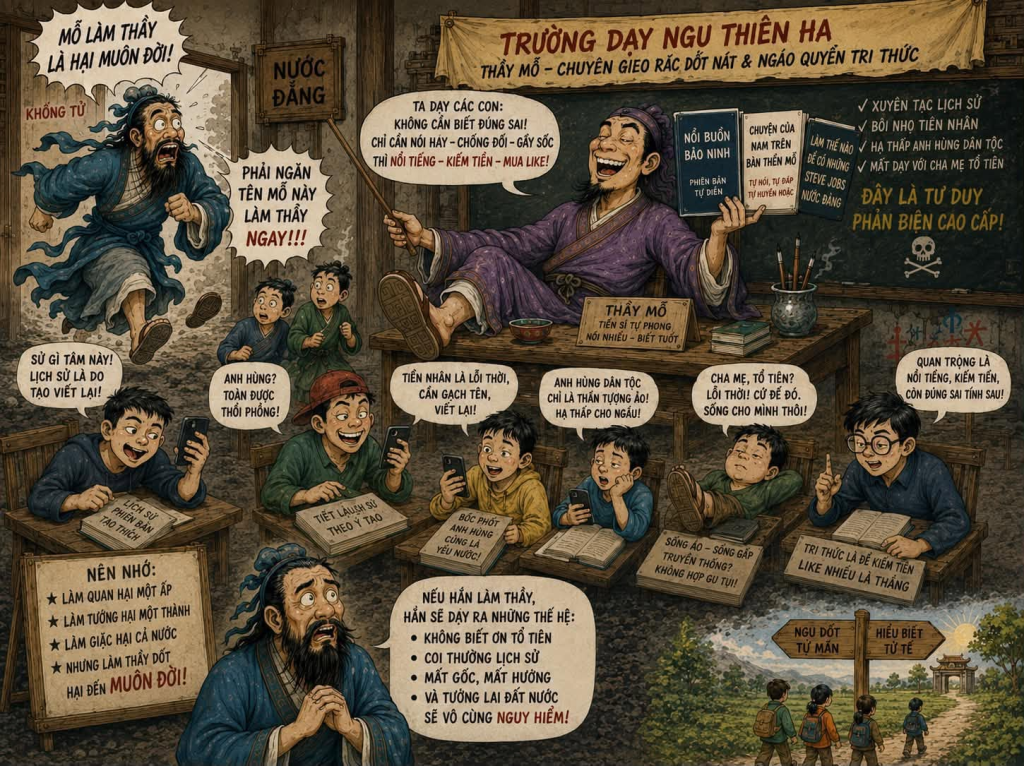
The image presented here is a striking piece of symbolic artwork that explores the relationship between teaching, influence, knowledge, and responsibility. Rich in visual metaphors and layered storytelling, the illustration invites viewers to reflect on one of the most important questions any society can ask:
What kind of ideas are we passing on to future generations?
At first glance, the scene appears almost theatrical.
A self-proclaimed teacher sits confidently before a group of students, surrounded by books, slogans, and dramatic declarations. His audience listens with enthusiasm, absorbing every word without hesitation. Yet beneath the humor and exaggerated imagery lies a deeper message about the dangers of misinformation, intellectual laziness, and the abandonment of critical thinking.
The artist uses satire not merely for entertainment but as a tool for reflection.
Throughout history, civilizations have risen and fallen not only because of military strength or economic resources but also because of the quality of ideas embraced by their people.
Knowledge builds nations.
Wisdom preserves them.
Critical thinking protects them.
When education encourages curiosity, analysis, and independent thought, societies become stronger and more resilient.
When education is replaced by manipulation, sensationalism, or blind acceptance, the consequences can extend far beyond the classroom.
The image highlights this tension through its symbolic characters and exaggerated educational environment.
One of the most compelling themes explored in the artwork is the distinction between information and wisdom.
Modern society has access to more information than any generation in human history.
Millions of books, articles, videos, and opinions are available instantly through digital technology.
Yet access to information does not automatically produce understanding.
Knowledge requires effort.
Wisdom requires reflection.
Critical thinking requires discipline.
The illustration appears to suggest that individuals must learn not only how to consume information but also how to evaluate it.
Another significant theme within the artwork is the influence of teachers and public figures.
Throughout history, educators have played a crucial role in shaping civilization.
A good teacher does more than provide answers.
A good teacher inspires questions.
They encourage students to think independently.
They cultivate intellectual honesty.
They help learners distinguish evidence from assumption and fact from opinion.
The image reminds viewers that teaching is one of the most influential responsibilities a person can undertake because ideas transmitted today may shape society for decades to come.
The visual narrative also explores the power of historical memory.
Every generation inherits stories, traditions, achievements, and lessons from those who came before.
History serves not merely as a record of events but as a source of collective experience.
It helps societies understand their successes, mistakes, struggles, and triumphs.
When historical understanding is neglected, communities risk losing valuable lessons that could guide future decisions.
The artwork uses symbolic references to encourage reflection on the importance of preserving historical awareness while remaining open to thoughtful discussion and interpretation.
Another fascinating aspect of the image is its portrayal of modern media culture.
The students depicted in the illustration appear heavily influenced by devices, quick reactions, and attention-grabbing messages.
This element reflects a broader reality of contemporary life.
Digital platforms have transformed communication, creating unprecedented opportunities for learning and connection. However, they have also increased the importance of media literacy.
In a world where information spreads rapidly, individuals must develop the ability to verify sources, analyze claims, and think critically before accepting conclusions.
The artwork serves as a visual reminder of this responsibility.
The atmosphere of satire throughout the image adds another layer of meaning.
Satire has long been one of humanity’s most effective methods of social commentary.
Rather than offering direct instruction, it encourages audiences to laugh, question, and reflect simultaneously.
By exaggerating certain behaviors and attitudes, satire highlights underlying concerns that might otherwise go unnoticed.
The artist uses this technique skillfully, transforming the illustration into a conversation about education, culture, and the future.
Perhaps the most important message conveyed by the artwork is the value of independent thinking.
Independent thinking does not mean rejecting all authority or tradition.
Rather, it means engaging with ideas thoughtfully and responsibly.
It means asking questions.
Seeking evidence.
Considering different perspectives.
Learning continuously.
These qualities strengthen individuals and societies alike.
The image ultimately reminds viewers that the future depends not only on what is taught but also on how people learn.
A healthy society encourages curiosity.
It values knowledge.
It rewards integrity.
It respects history while embracing thoughtful progress.
Most importantly, it teaches future generations to think rather than merely repeat.
Through its rich symbolism, humor, and powerful visual storytelling, this artwork serves as a thought-provoking reflection on the enduring importance of education, wisdom, and intellectual responsibility.
In a rapidly changing world, these principles remain among humanity’s most valuable assets.
©2020 Copyright All Rights Reserved by Ming Vault.

