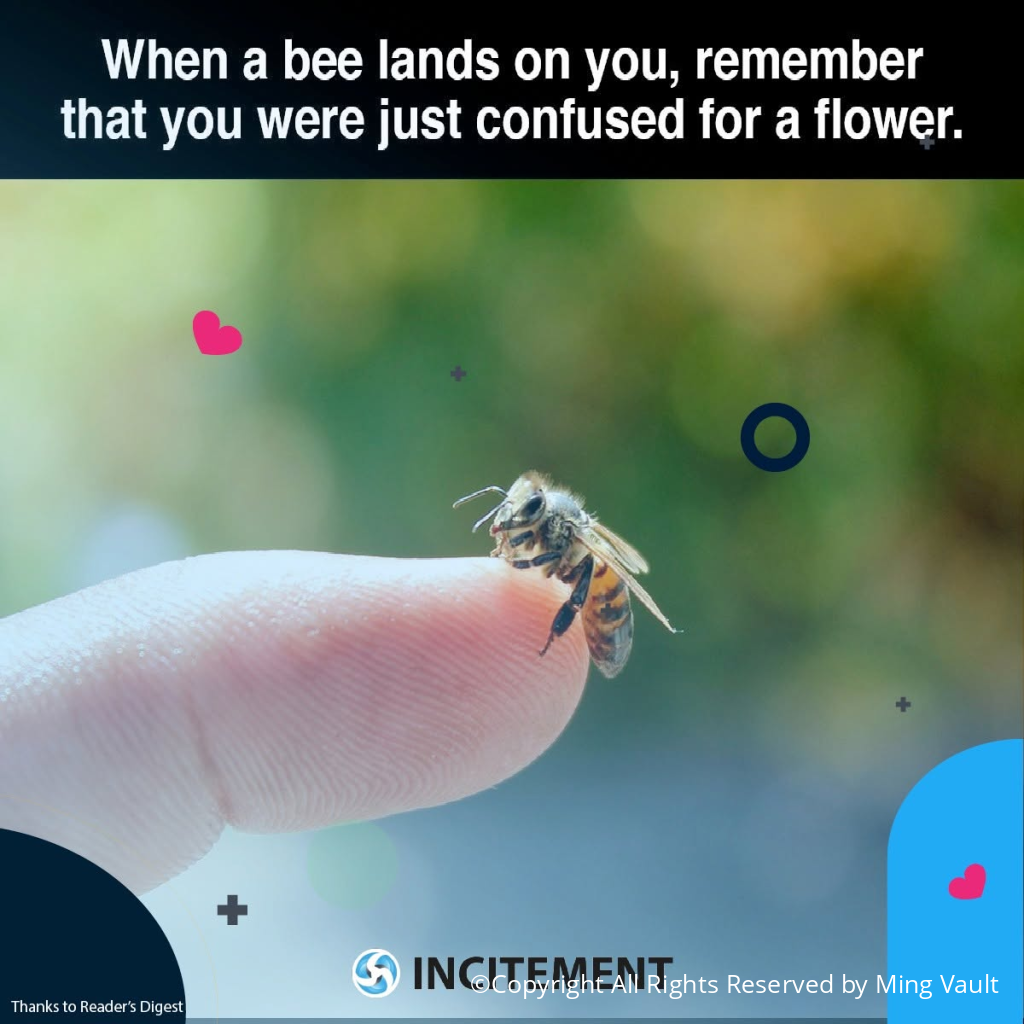
Bees are often misunderstood despite playing one of the most important roles in maintaining healthy ecosystems. Their primary mission is to search for nectar and pollen, not to sting humans. When a bee briefly lands on a person, it is usually investigating a scent, bright clothing, or floral fragrances that resemble the plants it naturally visits.
The quote featured in the image reflects a lighthearted but meaningful perspective. Bees rely heavily on visual cues and chemical signals when foraging. Perfumes, lotions, colorful fabrics, or even sweet-smelling products can unintentionally attract them, causing a curious bee to pause momentarily before continuing its search for flowers.
Understanding bee behavior helps reduce unnecessary fear. Honeybees are generally non-aggressive and prefer to avoid conflict whenever possible. They typically sting only when they feel trapped or perceive a direct threat to themselves or their colony. Remaining calm and allowing the bee to leave on its own is often the safest response for both the person and the insect.
Pollinators like bees contribute significantly to global food production. Many fruits, vegetables, nuts, and flowering plants depend on bee pollination to reproduce successfully. Without healthy bee populations, agricultural productivity and biodiversity would decline, affecting both natural ecosystems and food security around the world.
Unfortunately, bee populations face increasing challenges from habitat loss, pesticide exposure, climate change, diseases, and declining floral diversity. Conservation efforts encourage planting native flowers, reducing unnecessary pesticide use, and creating pollinator-friendly gardens that provide bees with reliable sources of nectar and shelter throughout the year.
Public awareness campaigns continue to emphasize that protecting bees is not solely an environmental issue—it is also an economic and agricultural priority. Farmers, researchers, conservation groups, and local communities are working together to promote sustainable practices that safeguard pollinator populations while maintaining productive farming systems.
Simple actions taken by individuals can collectively make a meaningful difference. Growing flowering plants, supporting local conservation initiatives, preserving green spaces, and learning about pollinators all contribute to healthier ecosystems. By replacing fear with understanding, people can coexist more peacefully with these remarkable insects while helping ensure their survival for generations to come.
©2020 Copyright All Rights Reserved by Ming Vault